


PRODUCTS

SL4 Plus Centrifuge Series
The ST4/ST4R Plus series centrifuges come standard with an easy-to-use keypad and high contrast LCD display. This high-capacity and versatile unit offers consistent performance and is ideal for routine applications. Quickly and securely swap between 13 unique rotor options with the tool-less Auto-Lock rotor exchange. Available for purchase individually or in convenient application-based packages.
Cell Culture packages include the centrifuge, rotor, ClickSeal biocontainment lids and a set of four 15 mL and 50 mL conical tube adapters.
Blood Tube packages include the centrifuge, rotor, ClickSeal biocontainment lids and a set of four 5/7 mL and 9/10 mL blood tube adapters.
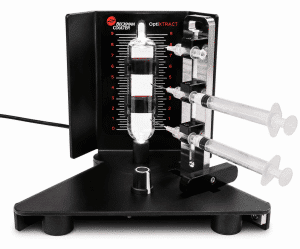
OptiXTRACT Sample Recovery Aid
The OptiXTRACT Sample Recovery Aid is a controlled, standardized extraction instrument designed to streamline the post-density gradient ultracentrifugation (DGUC) recovery phase. The system standardizes the manual extraction of separated biological fractions, allowing operators to isolate up to 5 distinct bands per tube. By containing the tube within a stable, mechanical mount, the platform removes direct manual handling during extraction to secure sample layers and minimize physical turbulence. Engineered with a compact footprint, the device fits directly inside standard biosafety cabinets to maintain strict sterility and environmental containment protocols.
Core Technologies & Operational Features
-
Guide-Rail Controlled Piercing: Utilizes a rigid slide rail system that guides needle movements along a fixed vector, facilitating hands-free puncturing and mitigating accidental needle sticks or sharps hazards.
-
Secure Tube Holders: Features heavy-duty, stable positioning mounts that lock various centrifuge tubes firmly in place, eliminating tube slippage, preventing spills, and minimizing fluid agitation.
-
Dimmable LED Illumination: Equipped with an integrated, adjustable LED back-light system that illuminates the sample tube directly, allowing operators to clearly visualize and target fraction bands without lifting or shifting the tube.
-
Precision Graduations: Incorporates clear, highly visible measurement markings along the assembly to facilitate repeatable, accurate needle positioning across identical runs.
-
Sterility Optimization: Designed to support a sterile workflow, featuring a single-use sterile syringe adapter mechanism optimized for cleanroom and biosafety cabinet integration.
Primary Preparative Applications
-
Precision Viral Band Recovery: Standardized needle positioning for harvesting high-purity fractions of Adeno-Associated Virus (AAV), Lentivirus, and Adenovirus directly from gradient matrices.
-
Exosome Fraction Extraction: Controlled collection of distinct extracellular vesicle (EV) and exosome subpopulations without disturbing adjacent, non-target density layers.
-
Iso-Density Gradient Harvesting: Mechanical recovery of target biological materials from density media arrays, including continuous or step gradients composed of Cesium Chloride (CsCl), Sucrose, or Iodixanol.
-
Subcellular Organelle Isolation: Clean extraction of isolated cellular components, such as intact mitochondria, nuclei, or microsomal layers, following differential centrifugation.
Looking for the complete solution? Discover how OptiMATE, Optima XPN, and OptiXTRACT integrate seamlessly into an end-to-end separation workflow. Visit our Knowledge Center Hub.
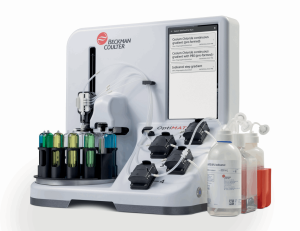
OptiMATE Gradient Maker for Centrifugation
The OptiMATE Gradient Maker is an automated pre-centrifugation sample preparation instrument specifically engineered to standardize the density gradient ultracentrifugation (DGUC) workflow. The platform automates essential pre-centrifugation steps, including gradient preparation, precise dispensing, and tube sealing, minimizing manual handling and reducing user-to-user variability across operators and laboratory runs. Designed with a compact footprint, the system can operate directly within standard biosafety cabinets or bench spaces near ultracentrifugation equipment to maintain proper containment workflows.
Core Technologies & Operational Features
-
Automated Gradient Preparation: Automates the formation of complex linear and step density gradients, removing the need for manual layered pipetting or gravity-driven gradient makers.
-
Integrated Tube Sealing: Incorporates automated tube sealing directly into the dispense program, minimizing operator exposure to sharps or hazardous biological materials and standardizing containment for Quick-Seal configurations.
-
Run Time Optimization: By generating pre-formed linear gradients prior to centrifugation, the system eliminates the extended run hours typically required for a density gradient to form under centrifugal force. This enables separation protocols to rely strictly on particle migration, cutting subsequent centrifuge separation times by over 75%.
-
Protocol Standardization: Features an intuitive user interface that allows operators to easily create, specify, and publish custom methods detailing specific tube formats, reagents, and gradient volumes.
-
Setup Verification: Employs a step-by-step graphical workflow guide to walk users through labware loading, accessory connection, and fluidic line placement, ensuring fast operator training and minimized setup errors.
Primary Preparative Applications
-
Advanced Downstream Viral Vector Purification: Rapid preparation of precision gradients for separating full vs. empty capsids in Adeno-Associated Virus (AAV), Adenovirus (AdV), and virus-like particles (VLPs) workflows.
-
Extracellular Vesicle & Exosome Isolation: Generation of continuous or step density matrices (such as Iodixanol or Sucrose) to fractionate delicate exosome subpopulations and extracellular vesicles (EVs) based on specific buoyant density.
-
Density Reagent Compatibility: Automated dispensing and mixing protocols validated for major density gradient media including Sucrose, Cesium Chloride (CsCl), and Iodixanol solutions.
-
Subcellular and Macromolecular Fractionation: High-reproducibility sample preparation for isolating cell organelles, ribosomes/polysomes, proteins/protein complexes, and nucleic acids/plasmids.
-
Advanced Nano-Delivery Isolation: Size-distribution and density-based fractionation of lipid nanoparticles (LNPs), lipoproteins, and synthetic nanoparticles (NPs).
Looking for the complete solution? Discover how OptiMATE, Optima XPN, and OptiXTRACT integrate seamlessly into an end-to-end separation workflow. Visit our Knowledge Center Hub.
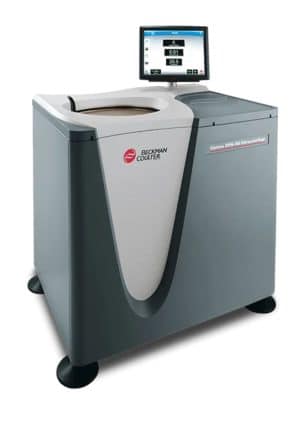
Optima XPN Preparative Ultracentrifuge
The Optima XPN is a high-performance floor-model preparative ultracentrifuge engineered for the isolation, fractionation, and purification of macromolecules, cellular organelles, and viral particles. Operating across three configurations—100,000 RPM, 90,000 RPM, and 80,000 RPM—the platform generates maximum centrifugal forces of up to 802,000 x g. This system is heavily utilized across academic core facilities, biopharmaceutical process development (R&D), industrial quality control (QC) laboratories, and clinical virology centers for high-resolution macromolecular separations. Designed for precision preparative workflows, the system utilizes a highly efficient thermoelectric refrigeration system (free of CFCs and ozone-depleting chemicals) that maintains strict temperature control within +/- 0.5 degrees C of the set temperature. Speed control is regulated within +/- 2 RPM of the set speed at velocities above 1,000 RPM. The drive system features quiet-drive technology, maintaining operational sound levels below 51 dBA to ensure a quiet laboratory environment.
Core Technologies & Operational Features
-
Advanced Software & Simulation: Equipped with proprietary Optima eXpert software, providing on-board calculations, simulations, and reference tools. This allows operators to mathematically model sedimentation profiles and optimize protocols prior to initiating physical runs.
-
Rotor Versatility & Tracking: Compatible with existing Beckman Coulter preparative rotors, including Fixed-Angle, Swinging-Bucket, Vertical-Tube, and Near-Vertical configurations. The system logs and tracks detailed rotor usage history and life cycles by individual serial numbers to ensure instrument safety.
-
Specialized Operational Modes: Features step-by-step dedicated screens for Zonal and Continuous Flow (CF) operations, standardizing the scale-up and processing of large-volume separations.
-
Data Integrity & Traceability: Supports multi-user environments with 50 unique user profiles and passwords under three distinct user access levels. The software generates exportable run logs and supports electronic signatures to maintain a strict chain of custody and GxP compliance.
-
Power & Run Stability: Engineered with enhanced power tolerance, automatically adjusting transformer taps to handle voltage fluctuations between 180 VAC and 264 VAC. In the event of a power interruption, the system tracks and records parameter data to verify if the run remained within acceptable boundaries.
-
Energy Management: Utilizes a regenerative braking system that reclaims deceleration energy and returns it to the local electrical circuit. During idle states, power consumption is minimized to the equivalent of a 60-watt light bulb.
Primary Preparative Applications
-
Preparative Density Gradient Separations: Execution of Rate-Zonal (separation by size/shape) and Isopycnic (separation by buoyant density) centrifugation using gradient media such as Cesium Chloride (CsCl), Sucrose, or Iodixanol.
-
Viral Vector Purification: Concentration, isolation, and downstream cleaning of Adeno-Associated Virus (AAV), Lentivirus, Adenovirus, and enveloped viral particles for gene therapy and vaccine development.
-
Extracellular Vesicle & Exosome Fractionation: Differential pelleting and subsequent gradient purification of exosome subpopulations from cell culture supernatants or physiological fluids.
-
Subcellular Component Isolation: Separation and isolation of intact organelles (mitochondria, nuclei, microsomes, lysosomes) and plasma membrane fractions.
-
Macromolecular & Nucleic Acid Fractionation: Isolation of ribosomal subunits, multi-protein complexes, plasmid DNA, and chromosomal DNA fractions.
Looking for the complete solution? Discover how OptiMATE, Optima XPN, and OptiXTRACT integrate seamlessly into an end-to-end separation workflow. Visit our Knowledge Center Hub.

Optima AUC – Analytical Ultracentrifuge
AUC enables researchers two complementary views of solution behavior. Sedimentation velocity provides first-principle, hydrodynamic information about the size and shape of molecules. Sedimentation equilibrium provides the same type of information about the solution molar masses, stoichiometries, association constants and solution nonideality. Scientist can investigate nearly any type of molecule or particle over a wide range of concentrations and in a diverse variety of solvents and characterize samples in their native state under biologically relevant solution conditions.
Extracellular Vesicles
AUC can be an effective method to determine
EV composition and concentration.
Nanoparticle Analysis
AUC allows resolution of up to 1nm. Provides population statistics and determines the shape
of the particle.
Carbon Nanotubes
AUC can distinguish between more than 300 different species of carbon nanotubes, their length, purity and integrity.
Drug Discovery
Analytical ultracentrifugation allows characterization of:
•Conjugation efficiency of Antibody -Drug conjugates
•Toxicology lot evaluation
•API and drug formulation stability and lot release
•Formulation stress testing
Stoichiometry
AUC can distinguish between hydrodynamically unresolved materials. Elucidating the relative amounts of species in a co-sedimenting complex. In conjunction with additional hydrodynamic information- True Stoichiometry can be obtained.
Aggregation Analysis
AUC allows non disruptive study of protein interactions in almost any buffer.
•Determination of “s” and “D”. Size distributions are not affected
•Differentiates reversible and irreversible aggregation
•Ternary interactions. Simultaneous determination of: Kd, Koff, concentration,
size and stoichiometry
Structural Analysis of Proteins
AUC is useful in determining such parameters as Polydispersity and Aggregation.
Allows rigorous quantitative determination of hydrodynamic and thermodynamic properties.
Complementary to structural biology.
AAV
AUC allows:
•Determine viral assembly state or homogeneity (empty, full or oligomer), Empirically quantify aggregation
•Determine sub- particle contamination
•Mass quantification to accurately measure genetic payload
Sedimentation Analysis
AUC allows the determination of Size, Anisotropy and Density. Dynamics, Composition and Conformation.

1300 Series Class II, Type A2 Biological Safety Cabinet Packages
Perform daily applications safely and efficiently with simple-to-order Thermo Scientific™ 1300 Series Class II, Type A2 Biological Safety Cabinet Packages, which include: Cabinet; manual, adjustable height stand; factory installed UV light and one set of armrests. These safety cabinets deliver exceptional design and technology advancements such as superior protection with proprietary airflow design, exceptional ergonomics for a safe and comfortable environment, and outstanding energy efficiency for operational cost savings.

Barnstead™ GenPure™ xCAD Plus Ultrapure Water Purification System
Gain flexibility in the lab with the Thermo Scientific™ Barnstead™ GenPure™ xCAD Plus Ultrapure Water Purification System. Its advanced technologies allow for simultaneous dispensing from up to three remote dispensers for ease of use in shared laboratory environments. This lab water system comes with leak detection, electronic dispensing for fully automatic volume control and feed water monitoring that alerts users to fluctuations in the feed water quality. All consumables needed for start-up come with the system, allowing for simple ordering and setup.

Tube Revolver Rotator
Increase your lab’s efficiency with the variable speed Thermo Scientific™ Tube Revolver / Rotator. A small footprint, flexible design and simple display help increase flexiblity and effectiveness.

Digital Dry Baths/Block Heaters
Increase lab versatility with the Thermo Scientific™ digital dry baths, which offer a range of configurations with interchangeable modular blocks for a variety of application needs. Designed for basic to advanced applications with a max temperature of 130°C, a timer and available in 1, 2 and 4 block sizes.

Digital Vortex
Designed for accurate speed control for continuous mixing or pulsing of samples. Digital display of Speed and Time and various accessories for different vessels.

Magnetic Stirrer
Experience reliability with the plug-and-play Thermo Scientific™ RT Basic Series Magnetic Stirrers, ideal for routine stirring applications. Three size options to choose from — 120mm, 170mm, or 220mm — all with a low-profile, lightweight design that has an extremely small footprint. The RT basic stirrers feature a chemical-resistant polypropylene top and body, a strong magnetic coupling to ensure consistent stirring during experimental procedures, and a brushless DC Motor that will not generate heat. Analog speed control ranges from 150 to 2500rpm. All units include two non-slip silicone plate covers for added protection from spills.

RT2 Basic Hotplate Stirrer
Rely on safety and consistent stirring speed with the Thermo Scientific™ RT2 Basic hotplate stirrer. Benefit from exceptionally strong magnet coupling power and a smooth-start stirring mechanism. Experience fast heat-up time and an excellent heat transfer rate thanks to the tightly integrated structure of the heater and a ceramic-coated aluminum alloy top plate which provides excellent temperature uniformity and corrosion resistance, while allowing for optimal monitoring of color changes in samples or media during operation.
